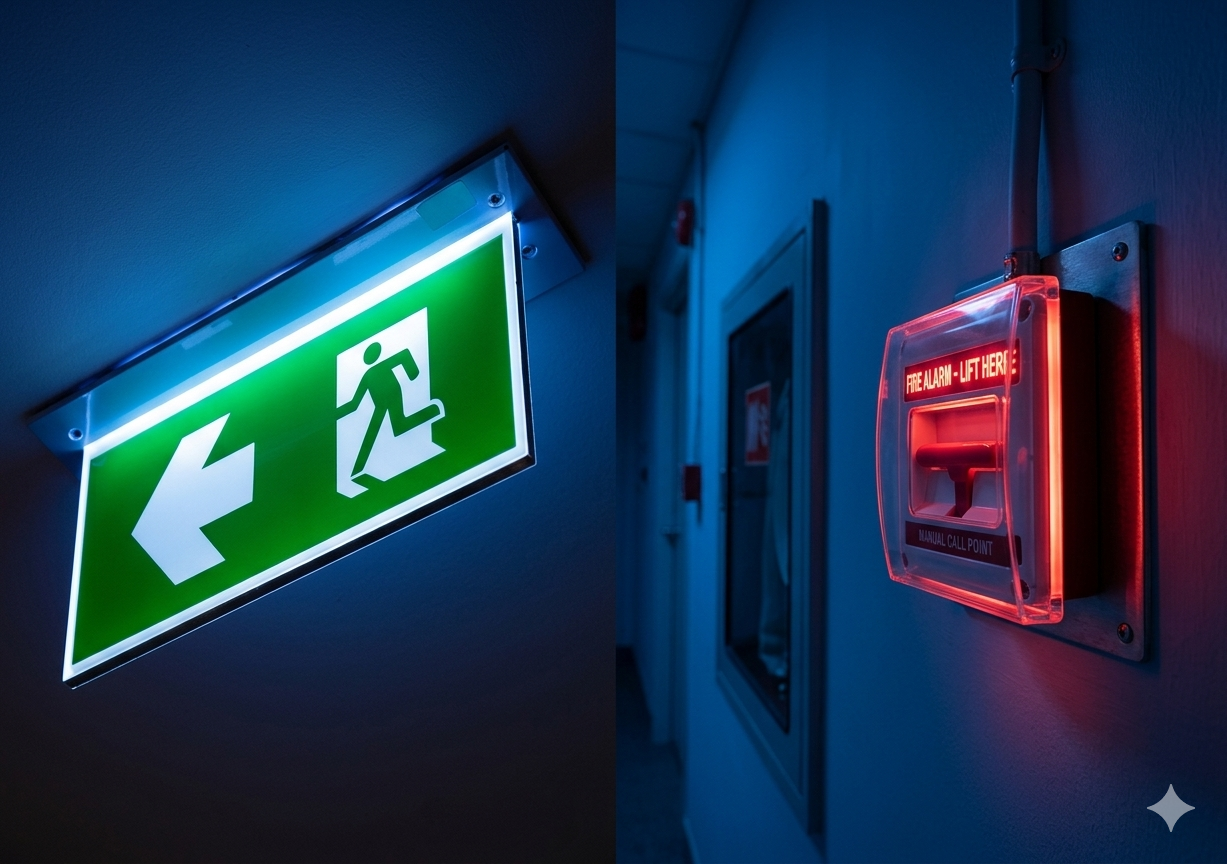
Emergency Lighting Installation in Darlington & the North East
Professional emergency lighting installation, maintenance and testing for commercial premises across Darlington, Teesside and the North East, carried out by a qualified, approved electrician. Fully certificated to BS 5266-1.
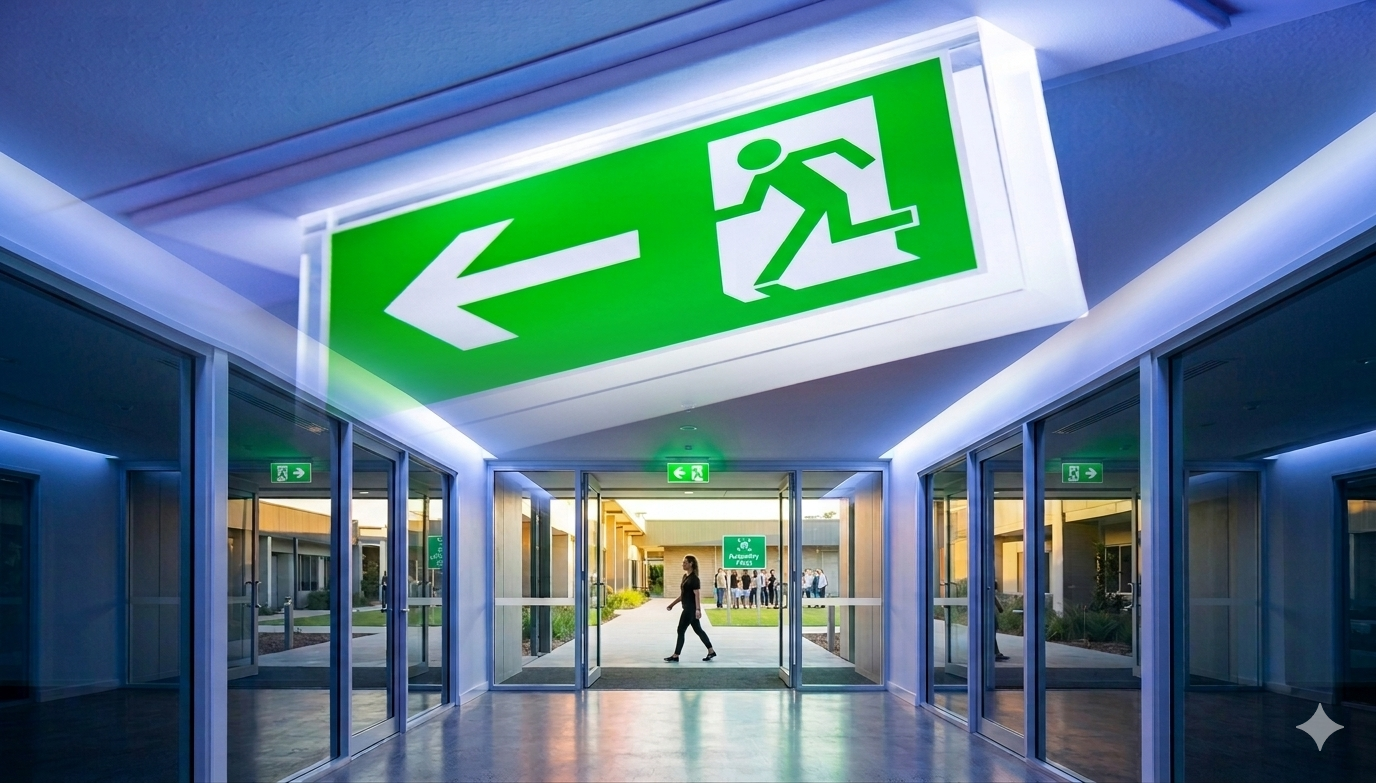
One-off visits or ongoing cover — your choice
We work with businesses across the North East on both a one-off and ongoing basis. Whether you just need your annual certificate or want us to handle all your testing throughout the year, we've got a package to suit.
All packages include a BS 5266-1 certificate and written logbook record. Contact us to discuss what suits your premises.
Emergency Lighting Testing — Weekly, Monthly & Annual
BS 5266-1 sets out clear requirements for how often emergency lighting must be tested and what each test involves. All tests must be recorded in a logbook kept on the premises.
Weekly Flick Test
A brief visual check carried out every week to confirm the emergency lighting system is operational. This is typically done by the premises manager or responsible person.
- Activate the test switch briefly (a few seconds)
- Visually check all luminaires illuminate
- Check exit signs and maintained fittings are lit
- Record the result in the logbook
- Report any failures immediately for repair
Monthly Function Test
A more thorough test carried out each month to simulate a mains power failure and confirm all luminaires operate correctly on battery power.
- Simulate mains failure using the test switch
- Check every luminaire illuminates correctly
- Hold for a short period as specified by the system
- Restore mains and confirm system recharges
- Record date, result and any defects in the logbook
Annual Full Duration Test
A full-rated duration test carried out once a year by a competent electrician. This verifies that the batteries can sustain the system for its full rated period — typically 3 hours.
- Mains supply isolated for the full rated duration
- All luminaires checked throughout the test period
- Battery capacity verified to rated duration
- Emergency lighting certificate issued on completion
- Full written record provided for your logbook
Emergency lighting for every type of premises
Whether you need a straightforward system for a small office or a comprehensive installation across a larger commercial property, we design and install emergency lighting systems that meet the requirements of your premises and satisfy BS 5266-1.
Escape Route Lighting
Illuminates corridors, stairwells and exit routes to allow safe evacuation in the event of a power failure.
Open Area Lighting
Anti-panic lighting for larger open areas such as shops, warehouses and halls to prevent panic during evacuation.
Exit Signs
Maintained and non-maintained illuminated exit signs clearly indicating escape routes and fire exits.
High Risk Task Area Lighting
For areas where machinery or processes need to be safely shut down before evacuation can take place.
System Upgrades
Replacement of failing luminaires, batteries and control gear on existing systems to restore compliance.
Logbook & Records
Full written test records, certificates and logbook setup so you have complete documentation for compliance purposes.
Is your premises required to have emergency lighting?
Emergency lighting is a legal requirement for most non-domestic buildings and shared residential premises. If people use the building and could be at risk during a power failure, it almost certainly applies.
Offices & Commercial Units
All offices, retail units, workshops and business premises where staff or the public are present.
Warehouses & Industrial
Industrial premises and warehouses, particularly where machinery is operated or staff work in low-light conditions.
HMOs & Residential Blocks
Houses in multiple occupation and residential apartment blocks where shared escape routes must be lit.
Hospitality & Leisure
Restaurants, bars, hotels, gyms and leisure facilities where members of the public are present.
Schools & Education
Schools, colleges and training facilities — emergency lighting is essential wherever children or vulnerable people are present.
Healthcare & Care Premises
GP surgeries, dental practices, care homes and any premises providing health or care services.
Common questions about emergency lighting
How often does emergency lighting need to be tested?
Under BS 5266-1, emergency lighting requires a brief weekly flick test, a monthly function test and a full annual duration test. All tests must be recorded in a logbook kept on the premises. The annual test must be carried out by a competent person and a certificate issued on completion.
What happens if emergency lighting isn't tested or maintained?
Failure to test and maintain emergency lighting can result in your premises failing a fire safety inspection, invalidating your insurance and — in serious cases — prosecution under the Regulatory Reform (Fire Safety) Order 2005. Keeping an up-to-date logbook and annual certificate demonstrates compliance.
How long does the annual test take?
The annual full duration test requires the emergency lighting to run on battery power for its full rated period — typically three hours. The time on site depends on the size of the premises and the number of luminaires, but you should expect to be without mains-powered emergency lighting for the duration of the test.
What is BS 5266-1?
BS 5266-1 is the British Standard for emergency lighting. It specifies the design, installation, commissioning and ongoing testing and maintenance requirements for emergency lighting systems in non-domestic premises. Compliance with this standard is required under the Regulatory Reform (Fire Safety) Order 2005.
Can you carry out the testing and issue the certificate?
Yes — we carry out the full annual emergency lighting test, check all luminaires, verify battery capacity and issue an emergency lighting certificate on completion. We also provide a written record for your logbook. Call or WhatsApp us to arrange a visit.
Do you cover Darlington and surrounding areas?
Yes — we provide emergency lighting installation and testing across Darlington, Teesside, Durham and surrounding areas across the North East.
Related services you might also need
Areas we cover for emergency lighting
Emergency lighting installation and testing for businesses across all of Darlington (DL1, DL2, DL3) and the wider North East.
Get a free quote for emergency lighting
Installation, annual testing or compliance certificate — tell us what you need and we'll come back to you quickly.
Or call us directly: 07950 388658 · WhatsApp
Quote request sent!
We'll be in touch shortly. Need something urgently? Call 07950 388658.
- BS 5266-1 compliant installation
- Weekly, monthly & annual testing
- Certificates & logbook records provided
- Commercial & residential premises
- Darlington & North East coverage